Premier Pilot Plant People

 Call Us
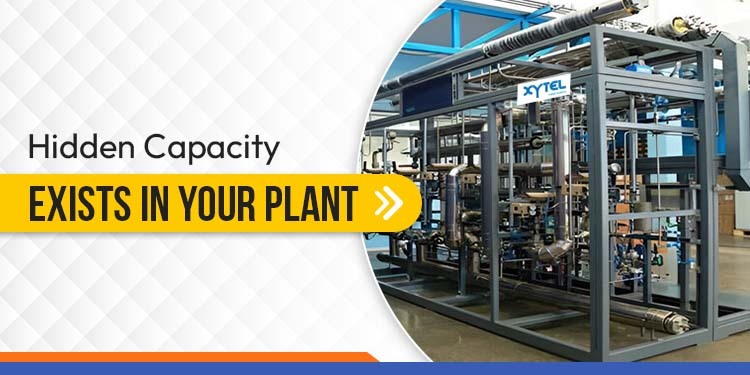
Hidden Capacity Exists in your Plant
Many industrial facilities operate significantly below their true potential, often losing 15% to 25% of their production capacity. This shortfall usually stems from un-validated process constraints rather than hardware limitations. By addressing specific technical hurdles such as maldistribution, residence-time imbalances, and heat-transfer bottlenecks through Pilot-validated strategies, Plant managers can safely recover lost throughput. This article explores how professional assessments and Pilot Plant data help teams optimize operating windows and improve overall performance without risking full-scale operations.Hidden Plant Capacity: The Technical Path to Enhanced Throughput
The gap between design capacity and actual operational output is a persistent challenge in the process industries. Data suggest that the vast majority of industrial Plants operate at a level significantly below their true capability. This performance gap is rarely the result of outdated machinery or a lack of modern automation. Instead, it is frequently caused by hidden Plant capacity being stifled by un-validated process constraints. When a facility runs 15% to 25% below its potential, the economic impact is substantial. To close this gap, engineers must look past the surface-level symptoms and identify the specific physical and chemical phenomena that limit production. At Xytel, the focus is on utilizing Pilot Plant validation to uncover these bottlenecks, providing a roadmap for safer and more efficient scale-up and optimization. Identifying hidden Plant capacity requires a deep dive into the fluid dynamics and thermal properties of a system. Several common issues repeatedly appear across various sectors, from petrochemicals to specialty chemicals. Maldistribution in Reactors and Columns One of the most frequent culprits of reduced throughput is the uneven distribution of fluids within a vessel. In large-scale reactors, if the feed does not interact uniformly with the catalyst bed, “hot spots” or “dead zones” can occur. This leads to poor conversion rates and premature catalyst degradation. Similarly, in distillation columns, liquid or vapor maldistribution across packing or trays compromises separation efficiency. These issues often go unnoticed until a detailed process optimization study is conducted. Sub-optimal Residence Time Chemical reactions and physical separations are governed by time. If the residence time is too short, the desired conversion isn’t achieved; if it is too long, secondary reactions might produce unwanted byproducts or foul the equipment. Finding the sweet spot for residence time is critical for maximizing industrial process optimization. Often, the original design assumptions do not hold true under current feedstocks, leaving significant hidden Plant capacity on the table. Heat-Transfer Limitations Many processes are limited by how quickly heat can be added or removed. As Plants attempt to increase throughput, the existing heat exchangers or cooling jackets may reach Pilot-validated process their physical limits. Without Pilot-validated process optimization, attempting to push past these limits can result in thermal instability or equipment damage. Identifying these bottlenecks allows for targeted upgrades that provide the highest return on investment. Instability Under Variable Feed Conditions Industrial Plants today rarely deal with a consistent, perfect feed. Variations in raw material quality can cause operational instability. A process that works well under steady-state design conditions might struggle when the feed composition shifts. This instability forces operators to run the Plant conservatively, further burying the hidden Plant capacity that could be utilized with a more robust control strategy.The Role of Pilot Plant Validation in Debottlenecking
Trying to resolve these issues on a commercial scale is inherently risky. A trial-and-error approach on a full-scale unit can lead to off-spec products, environmental hazards, or total Plant shutdowns. This is where the importance of a debottlenecking assessment through Pilot Plants becomes clear. By simulating the process at a smaller scale, engineers can test various operating windows without jeopardizing the main production line. Pilot Plant validation allows for the testing of new catalysts, different feedstocks, and varied pressure or temperature profiles. The data gathered provides the confidence needed to make capital improvements or operational changes at the commercial level. At Xytel, the philosophy is centered on de-risking the path to higher performance. A Pilot Plant serves as a bridge between theoretical modeling and industrial reality. It confirms whether a proposed solution for reactor maldistribution or heat-transfer limitations will actually work in a real-world environment.Strategies for Recovering Lost Capacity
The journey to improving chemical Plant throughput begins with a systematic audit. This involves collecting high-fidelity data from the current operation and comparing it against the original design basis and theoretical maximums.- Data Acquisition: Use advanced instrumentation to monitor temperature profiles and pressure drops across critical equipment.
- Constraint Identification: Determine if the bottleneck is mechanical, kinetic, or thermodynamic.
- Simulation and Testing: Use Pilot-scale units to model the bottleneck and test potential solutions.
- Implementation: Apply the validated changes to the full-scale Plant, focusing on debottlenecking safely.
Conclusion
The existence of hidden Plant capacity is a call to action for process engineers and Plant managers. Operating 15-25% below true capability is an inefficiency that modern industries can no longer afford. By addressing the fundamental constraints of maldistribution, residence time, and heat transfer, facilities can achieve significant gains in throughput and profitability. Xytel India specializes in helping industrial teams navigate these complexities. Through expert debottlenecking assessments and Pilot-validated strategies, we provide the technical clarity required to optimize operations. If you suspect your Plant is holding back its true potential, now is the time to look deeper into your process constraints. Book a debottlenecking assessment with our process experts and start the process of reclaiming your Plant’s lost capacityGet in Touch
You will be amazed as how partnering with us becomes a game changer in your quest for R&D glory.