Premier Pilot Plant People

 Call Us
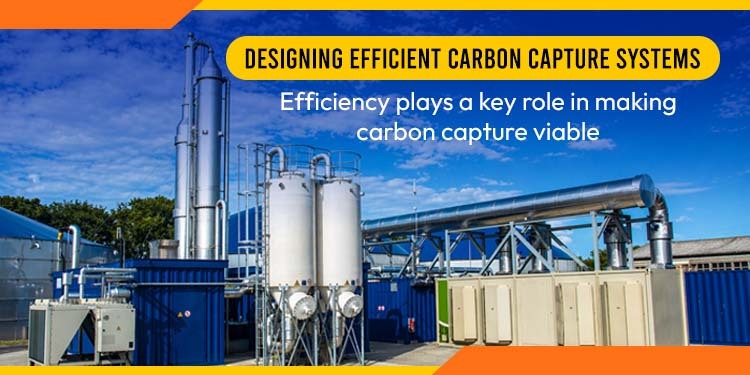
Designing Efficient Carbon Capture Systems- Efficiency plays a Key role in making carbon capture viable
Carbon capture is no longer a distant environmental aspiration; it is an immediate engineering necessity. However, the path from theoretical models to industrial reality is blocked by high energy demands and integration hurdles. This blog explores how focusing on efficiency during the Pilot Plant stage through precision engineering and optimized system design is the only way to make carbon capture a commercially and operationally viable solution for a greener future. The global shift toward decarbonization has placed carbon capture technology at the center of industrial strategy. While the scientific community has established that capturing CO2 is possible, the engineering community is now tasked with the much harder job of making it practical. As we look at the landscape of 2026, the conversation has moved from can we capture carbon? to can we do it efficiently enough to matter? Designing efficient carbon capture Pilot Plant systems is the primary challenge facing manufacturers today. Without a focus on performance, these systems remain expensive experiments rather than scalable industrial solutions. At Xytel India, we recognize that for carbon capture to succeed, it must be grounded in high-performance engineering that addresses energy and integration issues from the start.Overcoming Energy-Intensive Processes
One of the most significant barriers to the adoption of carbon capture is the parasitic energy load. Traditional CO2 capture technology often requires vast amounts of thermal and electrical energy to separate gases and regenerate solvents. This energy demand can significantly reduce the system’s net benefit. To improve feasibility, engineers must focus on optimizing energy consumption across the entire lifecycle of the plant. This involves:- Implementing advanced heat integration to recover and reuse energy within the process.
- Selecting and testing high-performance solvents that require lower temperatures for stripping.
- Utilizing precision system design to minimize pressure drops and pumping requirements.
Solving the Integration Puzzle
A major engineering challenge is how to fit new technology into existing industrial frameworks. Many facilities were not designed with carbon capture in mind, leading to significant integration challenges. A one-size-fits-all approach rarely works when dealing with varying flue gas compositions and space constraints. Designing efficient carbon capture systems requires a modular approach. Modular carbon capture design allows for easier installation and scaling without requiring a total overhaul of the existing plant infrastructure. By simplifying the way these systems connect to current operations, we reduce downtime and capital expenditure, making the transition to greener operations much smoother.The Role of the Pilot Plant in Scale-Up
The leap from a laboratory environment to an industrial site is where most technologies fail. This is why the Pilot Plant is the most critical phase in the development of carbon capture systems. A well-designed Pilot Plant serves as a proof-of-concept that demonstrates how the technology performs under real-world conditions. Optimization improves feasibility by allowing engineers to tweak variables in a controlled environment. Whether it is testing the durability of membranes or the efficiency of a specific solvent, the Pilot Plant provides the data needed to drive performance. Engineering excellence in this phase ensures that when the system is scaled to a commercial level, it operates reliably and meets its carbon reduction targets.Engineering as the Foundation of Sustainability
At the end of the day, efficiency isn’t just a metric or a line on a data sheet; it is the foundation of a greener tomorrow. When we focus on high-performance engineering, we are not just capturing carbon; we are building a sustainable business model. Designing efficient carbon capture systems means looking at the fine details from material selection to process automation. Precision engineering drives performance, ensuring that the system delivers a high return on investment while meeting stringent environmental regulations. By focusing on these core engineering principles, Xytel India helps brands move closer to their Net-Zero goals through systems that are as practical as they are impactful. The road to a sustainable future is paved with technical challenges, but through optimized design and a commitment to efficiency, those challenges become opportunities for innovation.Frequently Asked Questions (FAQ)
- Why is efficiency so important in carbon capture systems?
- What are the biggest integration challenges for industrial carbon capture?
- How does a Pilot Plant help in designing efficient carbon capture systems?
Get in Touch
You will be amazed as how partnering with us becomes a game changer in your quest for R&D glory.